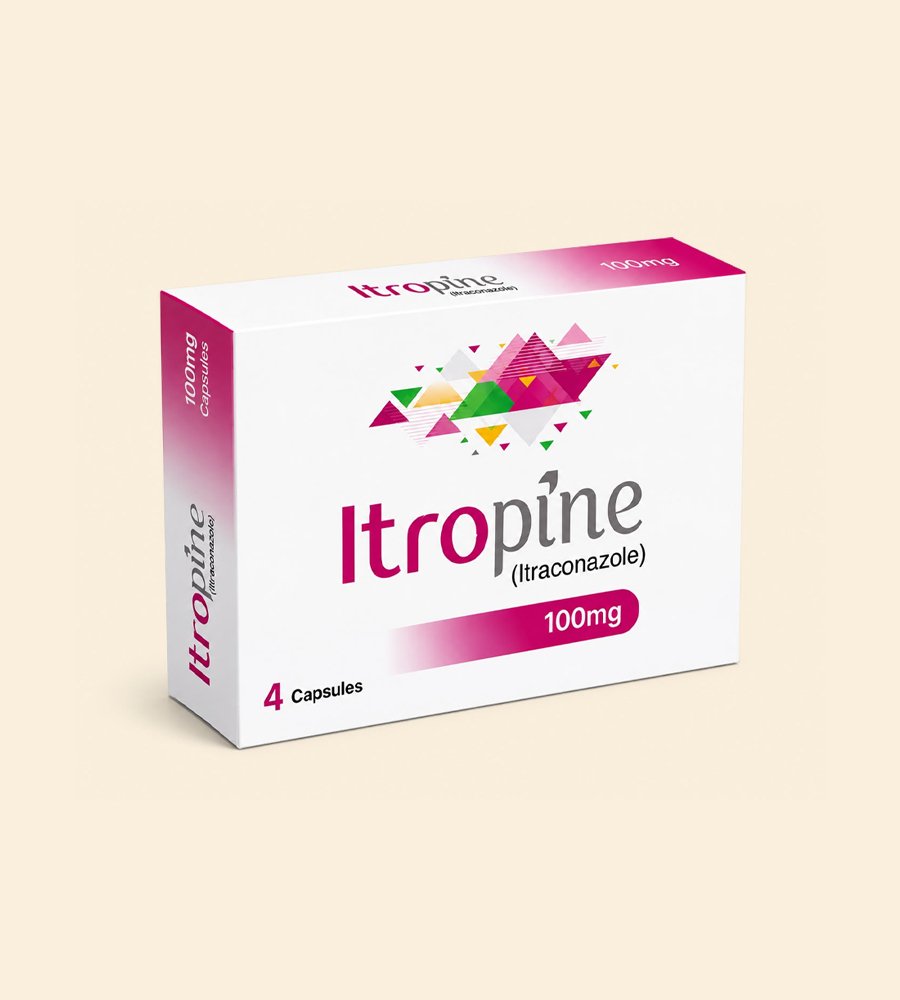
Itropine is indicated for the treatment of fungal infections caused by susceptible organisms, including:
Vulvovaginal candidiasis
Oral and esophageal candidiasis
Dermatophytosis (Ringworm)
Tinea corporis
Tinea cruris (Jock itch)
Tinea pedis (Athlete’s foot)
Pityriasis (Tinea) versicolor
Onychomycosis (Fungal nail infections)
Aspergillosis
Histoplasmosis
Blastomycosis and other systemic fungal infections (as prescribed)
Note: Itraconazole is effective only against fungal infections and should not be used to treat bacterial or viral infections.
Mechanism of Action
Itraconazole inhibits fungal cytochrome P450-dependent 14-α-demethylase, blocking the synthesis of ergosterol, an essential component of the fungal cell membrane. This results in inhibition of fungal growth and cell death.
Dosage & Administration
Adults: Dosage depends on the type and severity of the infection.
Common dose: 100–200 mg once or twice daily, as directed by the physician.
Take immediately after a full meal for better absorption.
Swallow the capsule whole with water.
Complete the full prescribed course of treatment.
Common Side Effects
Nausea
Vomiting
Abdominal pain
Indigestion
Headache
Dizziness
Diarrhea
Skin rash
Serious Adverse Effects
Seek immediate medical attention if any of the following occur:
Severe allergic reactions
Liver injury (yellowing of the skin or eyes, dark urine)
Heart failure symptoms (shortness of breath, swelling of legs)
Severe skin reactions (Stevens–Johnson syndrome)
Persistent vomiting or severe abdominal pain
Contraindications
Hypersensitivity to itraconazole or other azole antifungal agents



Reviews
There are no reviews yet.